Willa Ashford—Victor Bello
Match PointWilla Ashford and Victor Bello are longtime coach and athlete, close friends, and, after Colleen Sherman’s disappearance, part of the family Willa has left. Their relationship binds Willa’s return to volleyball to a more personal history of loss, mutual loyalty, and the life they built around the court.
A Longstanding Coaching Bond
Victor coached Willa and Colleen for years, sharing their intense commitment to volleyball. Willa’s athletic life later moved beyond competition: after retiring, she took an unpaid assistant coaching position at a high school and discovered that she loved teaching the sport. That turn toward coaching reflects the importance of instruction and mentorship in her life, even as she had vowed not to return to the sand.
Colleen’s disappearance and presumed death changed both friends’ lives. Willa could not imagine playing without her closest friend and partner; Victor, who had coached them, also stepped away from the sport. The loss made each reconsider what mattered, leaving their relationship grounded not only in volleyball but in a shared period of grief.
The Comeback and Victor’s Return
When prominent executives, sponsors, and donors urged Willa to come out of retirement for the tournament in Serenidad, the stakes extended beyond her individual career: it was the last opportunity for a United States team to earn a place in the next Olympic Games. Willa eventually decided that she could not let her and Colleen’s legacy end. She called Victor and asked him to return to coaching and help her pursue that goal. He could not refuse.
The decision reversed their withdrawal from the sport. Victor had moved on to own a private equity firm, while Willa had been exploring coaching rather than competition; now both were again organizing their lives around a volleyball campaign. With less than a week before the tournament, Willa and Tabby had only six days to develop as a team. Victor and Willa worked through potential partners using match videos, with Tabby becoming the choice after her former partner, Denise Salazar, broke two bones in her leg. Their task was not simply to resume familiar roles: they had to help a new partnership take shape under severe time pressure.
Victor’s support continued as the team prepared and competed. He helped Willa navigate the return, and their shared attention to the practical demands of the game sits alongside his deeper investment in her well-being. For Willa, his willingness to come back is an expression of a loyalty that survived both her retirement and his own departure from volleyball.
Friendship, Family, and Boundaries
Others questioned whether Willa and Victor were romantically involved: both were single, close in age, and bound by a shared passion for volleyball. Willa knew that neither had romantic feelings for the other. Their connection was one of mutual respect and friendship, and she was unwilling to jeopardize it by confusing intimacy with romance.
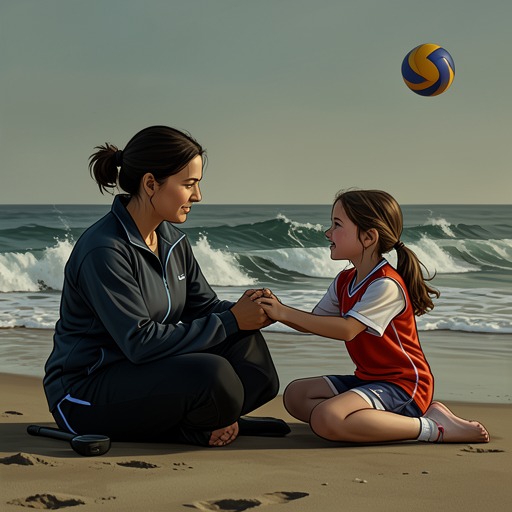
That clarity did not make the bond less profound. After Colleen was gone, Victor and his daughter, Victoria, were Willa’s only family. Willa adored Victoria and cherished time with her; she believed she might not have survived Colleen’s death without Victor and his daughter. Her repeated visits to Victor’s home and her fond memories of Victoria growing up around the court give that chosen-family bond a daily, lived dimension beyond the pressure of competition.
Shared Loss and Continuing Influence
Victor’s own family history helps explain the closeness of this small circle. His wife died of breast cancer when Victoria was less than a year old, and he devoted himself to raising his daughter. During the first years after his wife’s death, he kept Victoria in a crib near the court while coaching Willa and Colleen. Victoria took her first unsteady steps on the sand, cheered on by the people around her; Willa remembered the moment with affection.
The relationship therefore carries two connected kinds of continuity: Victor remains Willa’s trusted coach as she returns to play, and his home and family offer her a place of belonging after bereavement. Willa’s later decision to begin coaching again continues her own life in volleyball by another route. The evidence does not make that choice a simple substitute for competition or for Colleen; instead, it shows Willa moving between roles—athlete, student of the game, and teacher—within a community Victor helped sustain.